Home / Cases
CASE STUDY · DAPPER ONDERNEMEN · FINANCIAL COACHING

From 19 separate tools to one platform.

Dapper Ondernemen helps solo business owners get a handle on their numbers. The firm itself ran on nineteen tools that didn't talk to each other, with one person holding it all together. The audit came back with a clear diagnosis: they had plenty of tools and far too many loose ends. Today the team works in one platform built for them.

Client in BelgiumProject run in DutchScreens translated to English for this page
19tools when the audit started
4areas where time was leaking
1platform for team, clients and numbers
9processes that now run on their own
What happens when a client buys
  1. 1Purchase
  2. 2Kickoff email
  3. 3Payment reminder
  4. 4Portal access
  5. 5Prep task for the first session
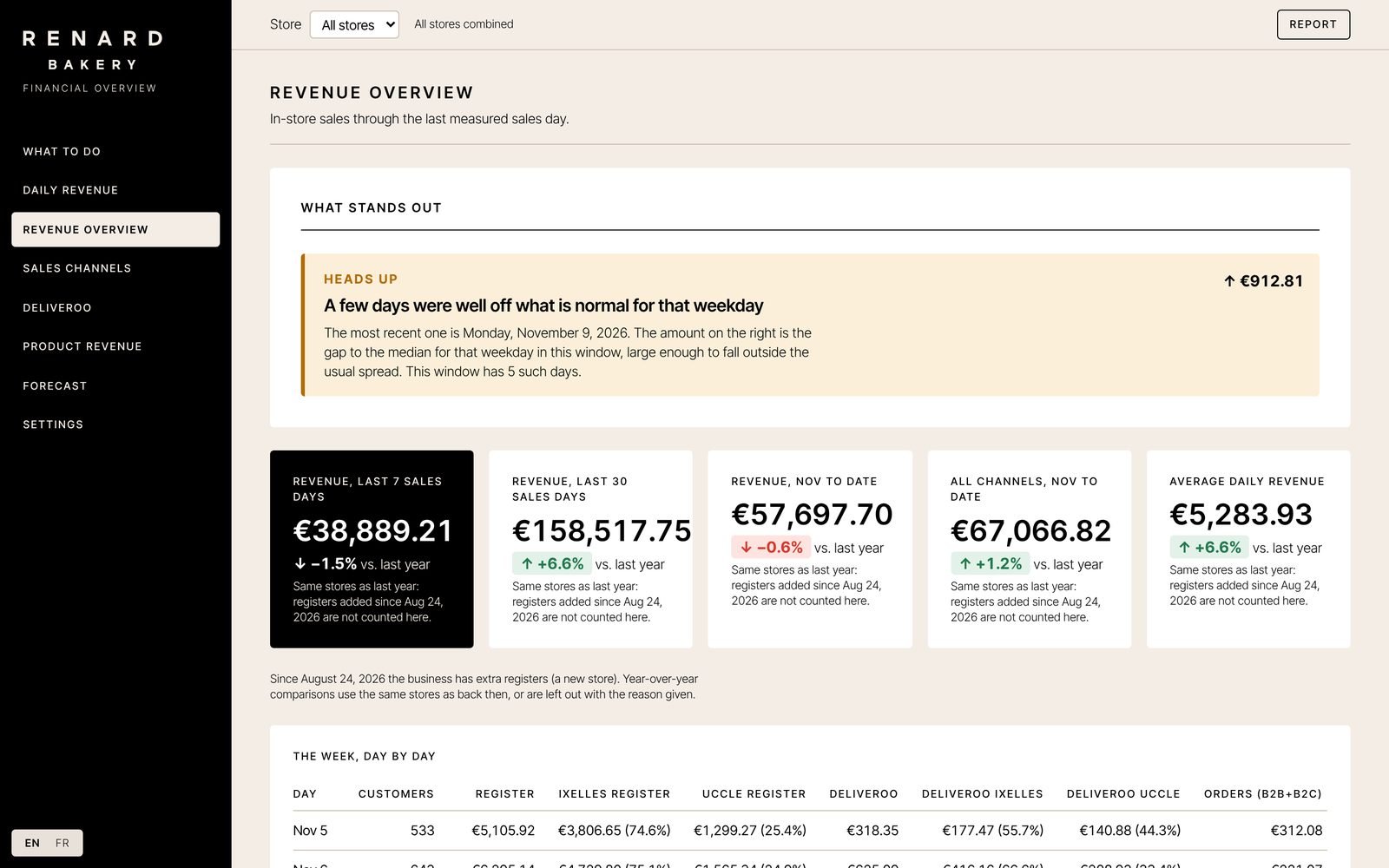
Dapper Ondernemen platform · demo data
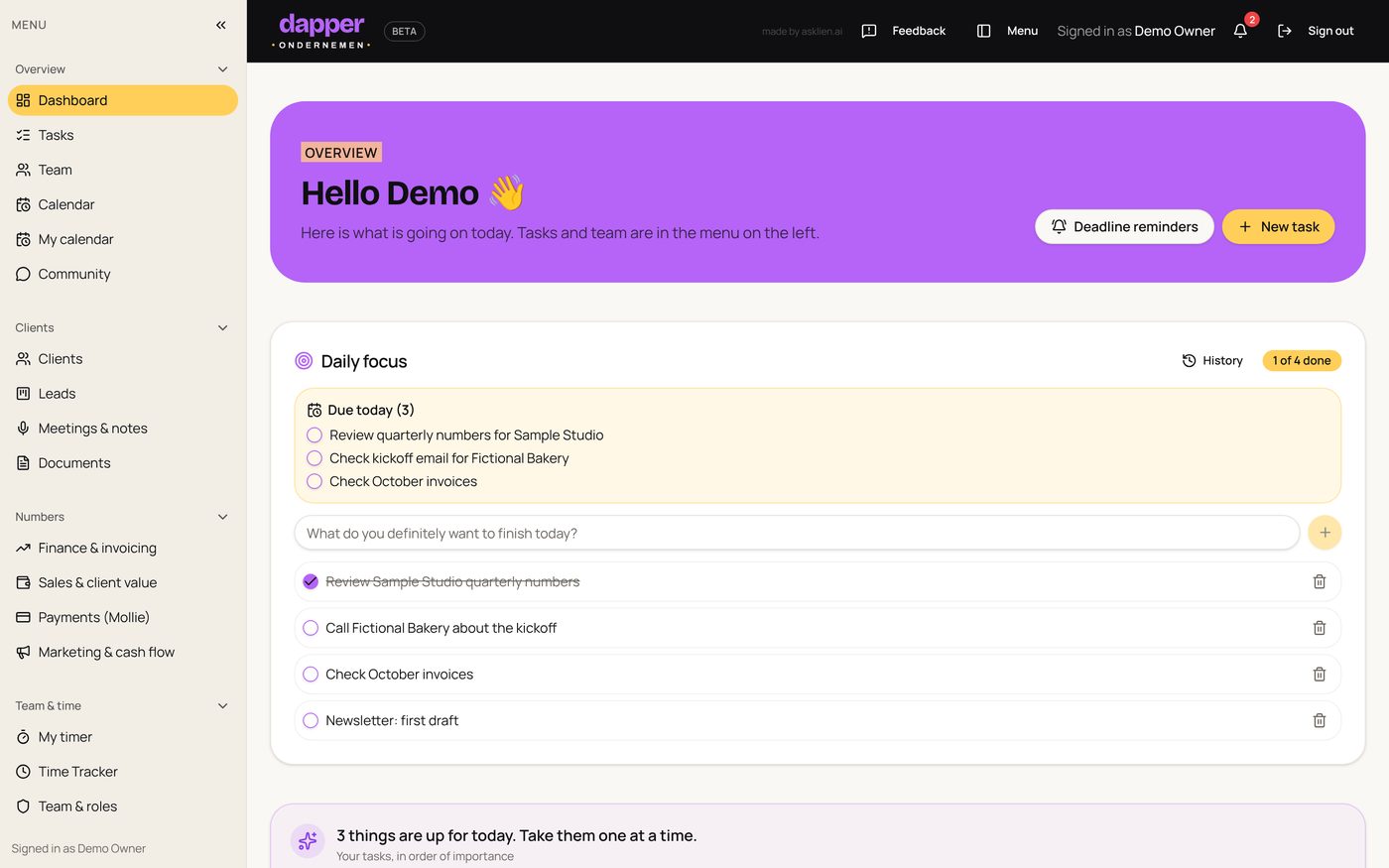
The dashboard: today's focus and today's deadlines.
Dapper Ondernemen platform · demo data
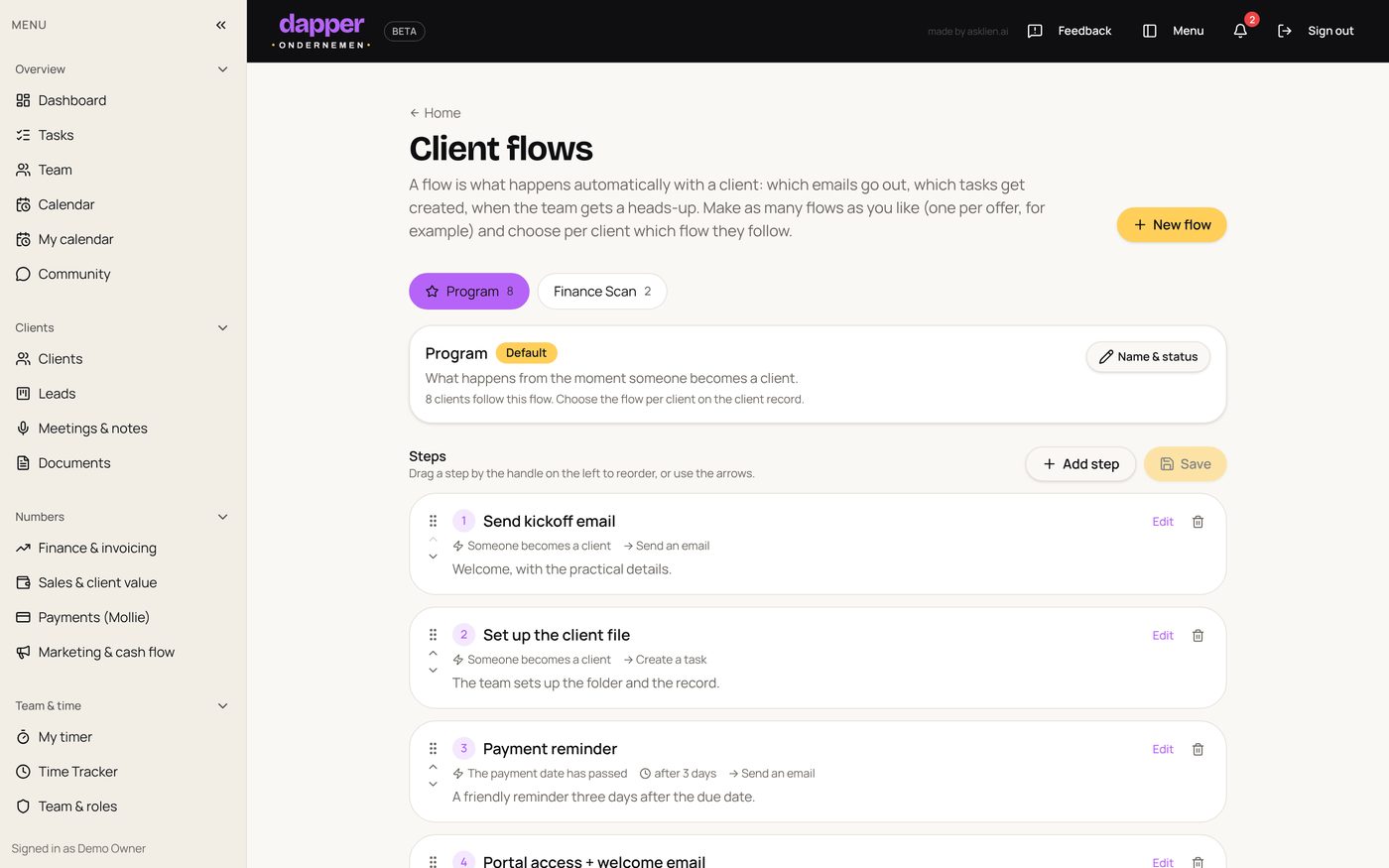
Client flows: what happens on its own once someone becomes a client.
Dapper Ondernemen platform · demo data
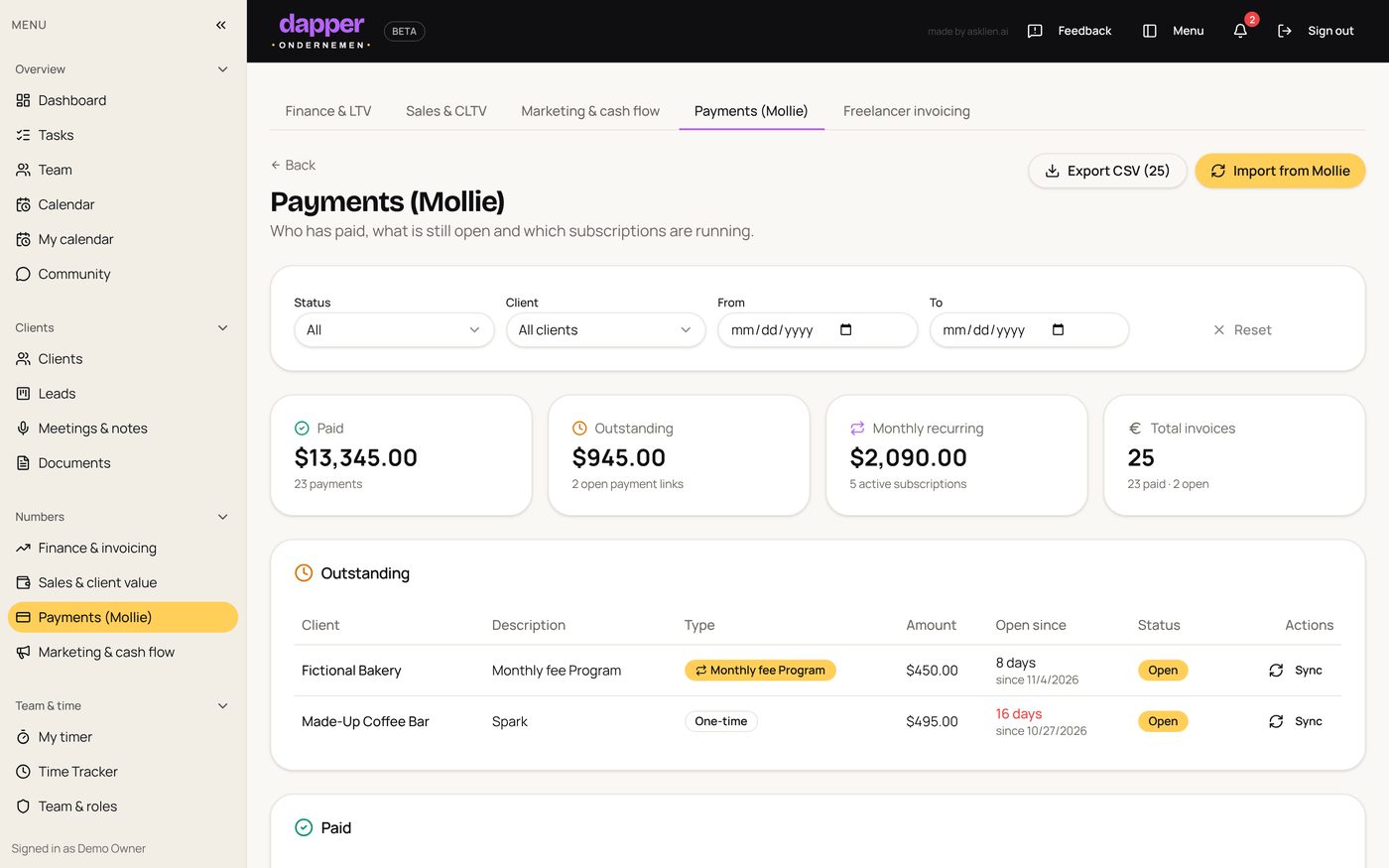
Payments: what's paid and what's outstanding, on one screen.
Dapper Ondernemen platform · demo data
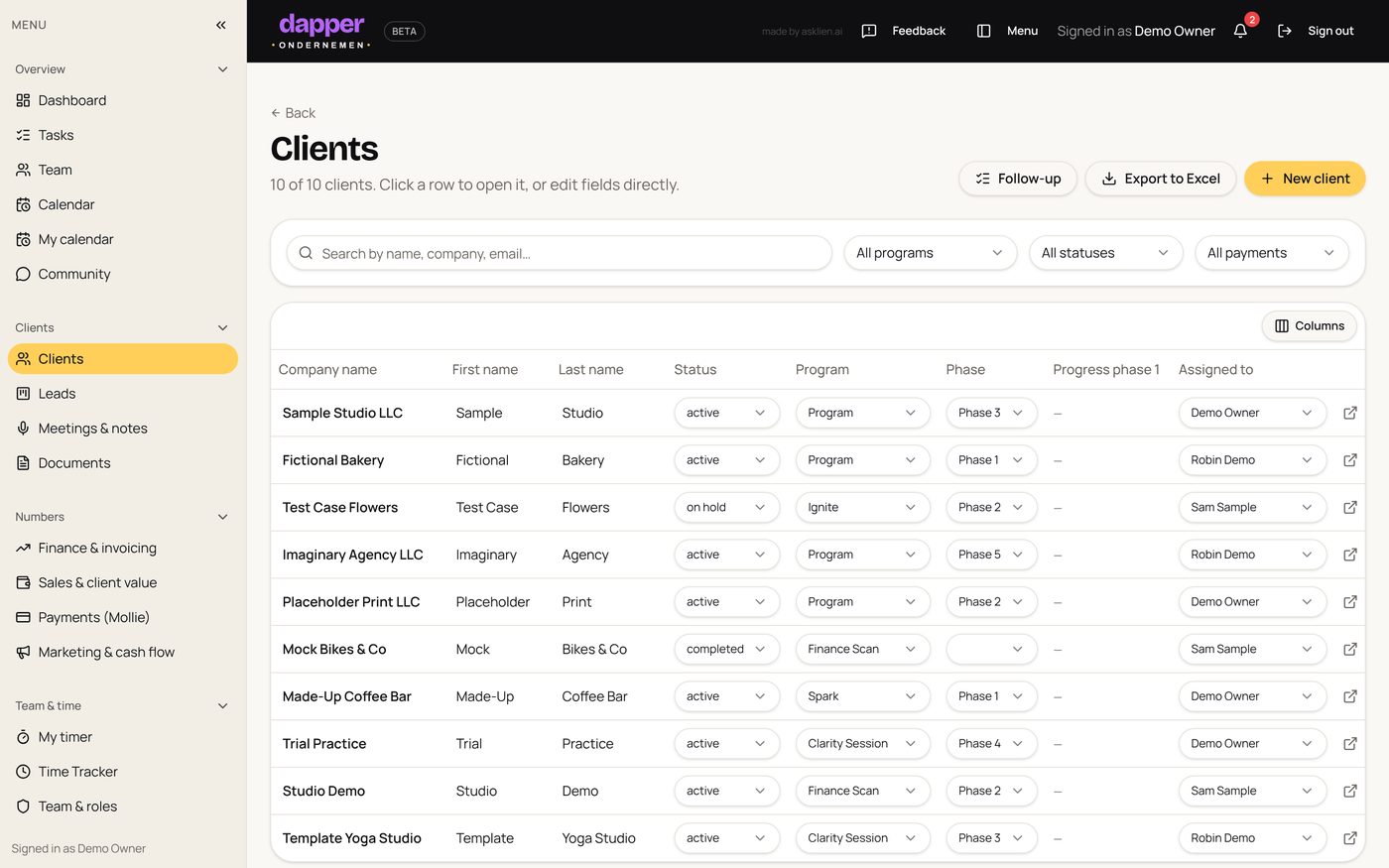
Clients: each with a status, program and phase.
Dapper Ondernemen platform · demo data
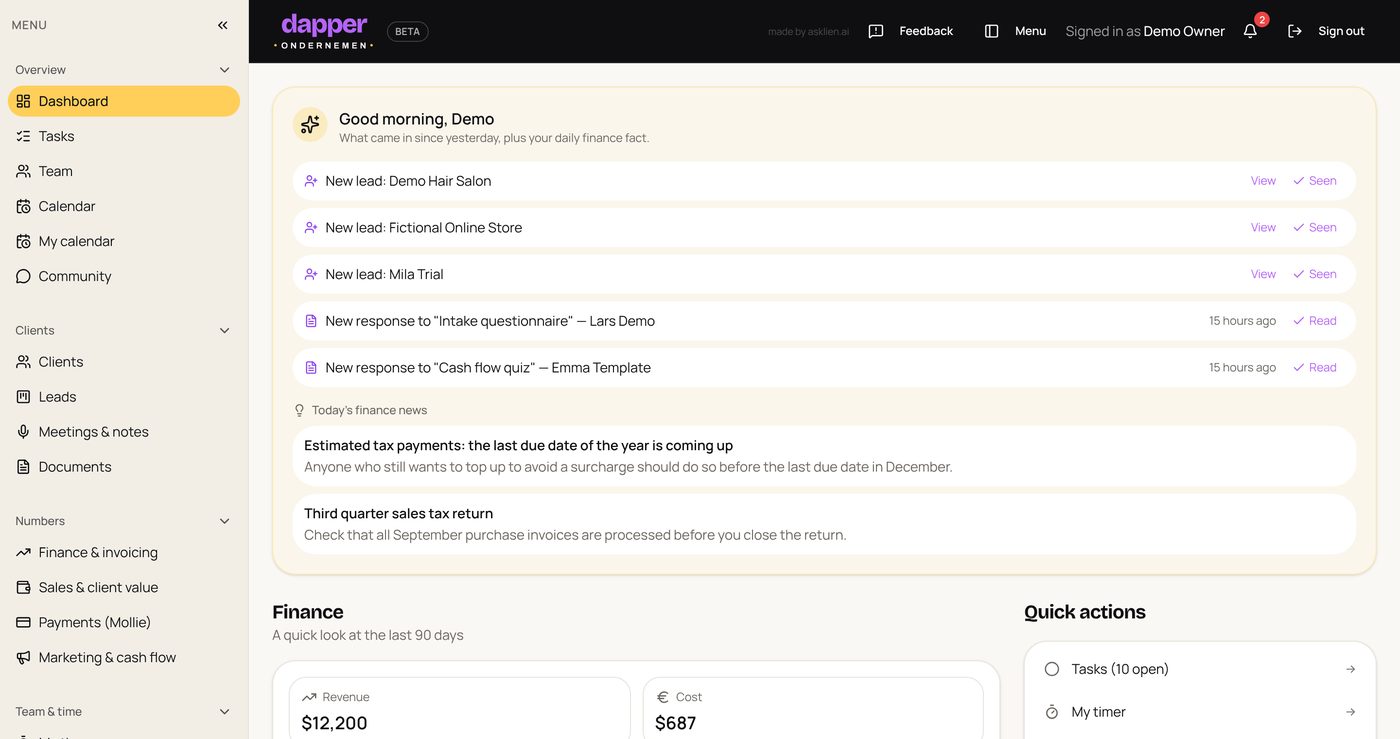
The morning briefing: new leads and the day's form responses.
Dapper Ondernemen platform · demo data
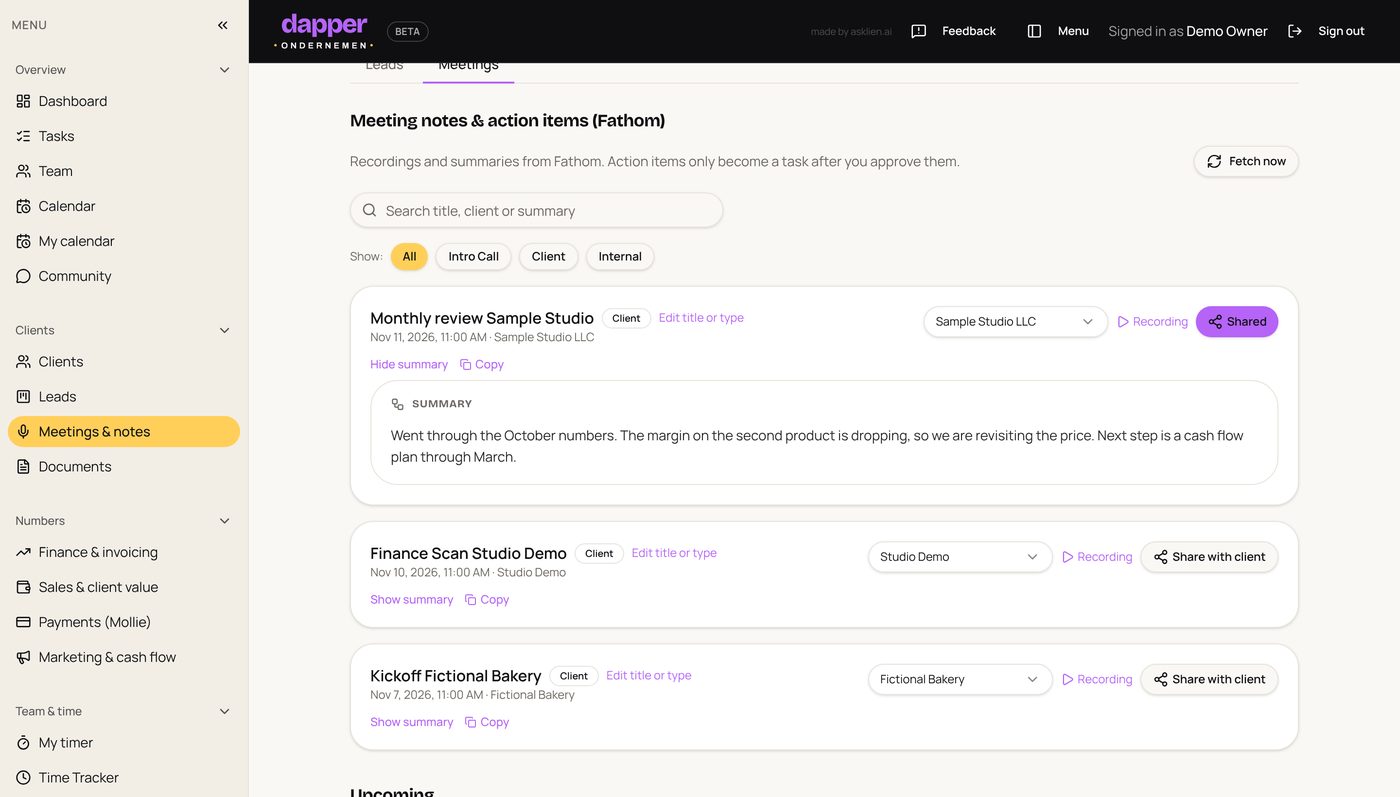
Meetings: recordings come in on their own, with a summary.

The screens are real, the clients are not  This is the platform itself, run locally with made-up clients and amounts. The team works in Dutch, so we switched the labels to English for this page.

Read the full storyWhere things stood · The audit · The choice: no twentieth tool
01

Where things stood

Dapper Ondernemen is a financial coaching firm. They offer one-on-one programs, workshops and talks for solo business owners. It's a small team with a few freelancers around it.

The client work was going well. Everything around it was a grind. A new client filled out a questionnaire, and then the manual work began: copying data over, writing a kickoff email, chasing missing documents one email at a time. Payments ran through three systems, and no single place showed who had paid and when. Content got made when there was time. Every question from the team went through the same person.

She said it plainly when we talked: she wanted the day-to-day execution off her plate as much as possible. That wasn't why she started the business.

02

The audit

I started by listening and asking questions. How does a client come in? What happens next? Who does what? Which tools are in use, and what do they really do? Then I wrote the report, and we went through it together on May 5. She corrected me where I'd gotten something wrong, which is part of the process.

The report covered four areas: client communication and follow-up, content, team structure, and the firm's own financial admin. It listed seven priorities, from quick wins to strategic moves. It reviewed all nineteen tools and showed which ones overlapped and which were barely used. It also proposed a new split of roles on the team.

The most important point fit in one sentence. Tuning each tool separately would only treat symptoms, because the real problem was that everything was scattered.

03

The choice: no twentieth tool

I could have built seven separate improvements, and it would have been faster. A year later they'd have had nineteen things sitting side by side again, just smarter ones.

We went the other way and built one custom platform where team, clients and numbers come together. We built it in phases, in a set order, starting on May 22.
Drowning in tools too?

Each tool solves one thing, and together they create a mess. A one-day audit shows which ones can go and what really needs to be built.

Tell me where you're stuck →
04

What we built.

It's one environment behind one login, for the team and for clients. Here's what's in it:

01Team and tasks

One task list for everyone, with a focus for the day, time tracking and notifications. Nobody has to ask what needs to get done.

02Leads and clients

Each client has a record showing their program and what phase they're in. Intake forms come straight into the platform.

03Automated flows

After a purchase, the kickoff email goes out on its own. The payment reminder follows, then portal access with a welcome email, then a prep task for the first session.

04Payments and invoices

The payment provider and the accounting software are connected. One screen shows who has paid and who hasn't.

05Daily briefing

Every morning there's an overview of what's going on that day. It has run every day since August.

06Meetings with action items

Call recordings come in automatically with the action items pulled out. One click sends them to the client or the freelancer.

07Client portal

Clients log in to their own space. The portal is built and is being opened up to existing clients step by step.

08Learning platform and store

Two courses with 48 lessons are ready, along with the firm's own online store. Both are built and ready to launch.

What runs on its own here

This is mostly workflows running on a platform. The agent comes in where it adds something.

WORKFLOWOne purchase kicks off a chain.

Kickoff email, payment reminder, portal access and a prep task, one after the other.

WORKFLOWMeetings turn into tasks.

Recordings come in automatically, and the action items go to the client or the freelancer.

WORKFLOWA briefing every morning.

It shows what needs attention today before anyone opens their inbox.

AGENTAn AI assistant inside the platform.

Still in the works: an assistant the team can ask about clients and client files.

PLATFORMOne environment for team, clients and numbers.

Everything above comes together behind one login.

05

How we worked together

The project had its own space in my hub, with six phases and a status report every week. We also had a short status meeting every week. Eighty feedback messages came in along the way, and I'm glad they did. Each one was something we'd have missed otherwise.

The platform has a feedback button built in. If someone spots a problem, they report it right where it happens. That makes fine-tuning part of the daily routine instead of a separate meeting.

06

What they get out of it

They haven't measured hours or money saved, so I won't quote any. Here's what's different today:

One place instead of nineteen.The team works in one environment and no longer has to remember which tool something was in.
Client onboarding runs on its own.From purchase to welcome email, nobody retypes anything.
Payments are visible.You can see who paid. Nobody has to compare three systems.
Conversations turn into action.What gets decided in a meeting lands as a task with the right person.
The day starts with an overview.The briefing shows what needs attention before anyone opens their inbox.
Clients get their own space.The experience of a program is no longer spread across emails and stray links.

The platform covers a lot of ground, and the team is growing into it step by step. The more data goes in, the more it shows them. That's how these projects always go.

Want this for your business?

One place for your team, your clients and your numbers. It starts with a look at how you work today.

Get in touch →
07

And it keeps growing

A retainer has been in place since September 1. It covers hosting, monitoring, security and room for small changes every month.

There's already a new list of requests: a more detailed client record, budgets per freelancer and per client file, and a dashboard with the firm's key numbers. I take that as a good sign. People who ask for more are using what they have.

The timeline

How an AI audit works

Most projects start the same way, and it doesn't take months to get going:

01Intro call

You tell me what you do and where you're stuck. I'll tell you straight whether an audit makes sense or whether something smaller would do the job.

02One day on site

I come to where the work happens and watch. How does work come in? Who decides what? Where does the time go? Which tools are you already paying for?

03The report

Within a week you get a report: where time and money are leaking, your priorities in order, a review of your tools, and concrete proposals in more than one size.

04You decide

Do all of it, part of it, or none of it. If you move ahead with a build, the audit fee is credited in full.

05We build in phases

Your team tests as we go. Nothing ships until the people who'll use it have tried it.

06Retainer

If you want it to keep running and keep growing, we look after it on a fixed monthly retainer.

An AI audit costs $2,000, credited in full if you move ahead with a build.

Book your audit day →

Wondering what this could look like for your business?

It starts with a conversation. You tell me where you're stuck, and I'll tell you what I'd do and what it would cost.