TrimTime is a dog grooming salon with one owner and a full calendar. That calendar lived in her head. She knew how often each dog comes back, how long each one takes, and who can only come on Wednesdays. We took that system out of her head and put it in one app, along with a real website and a client area.


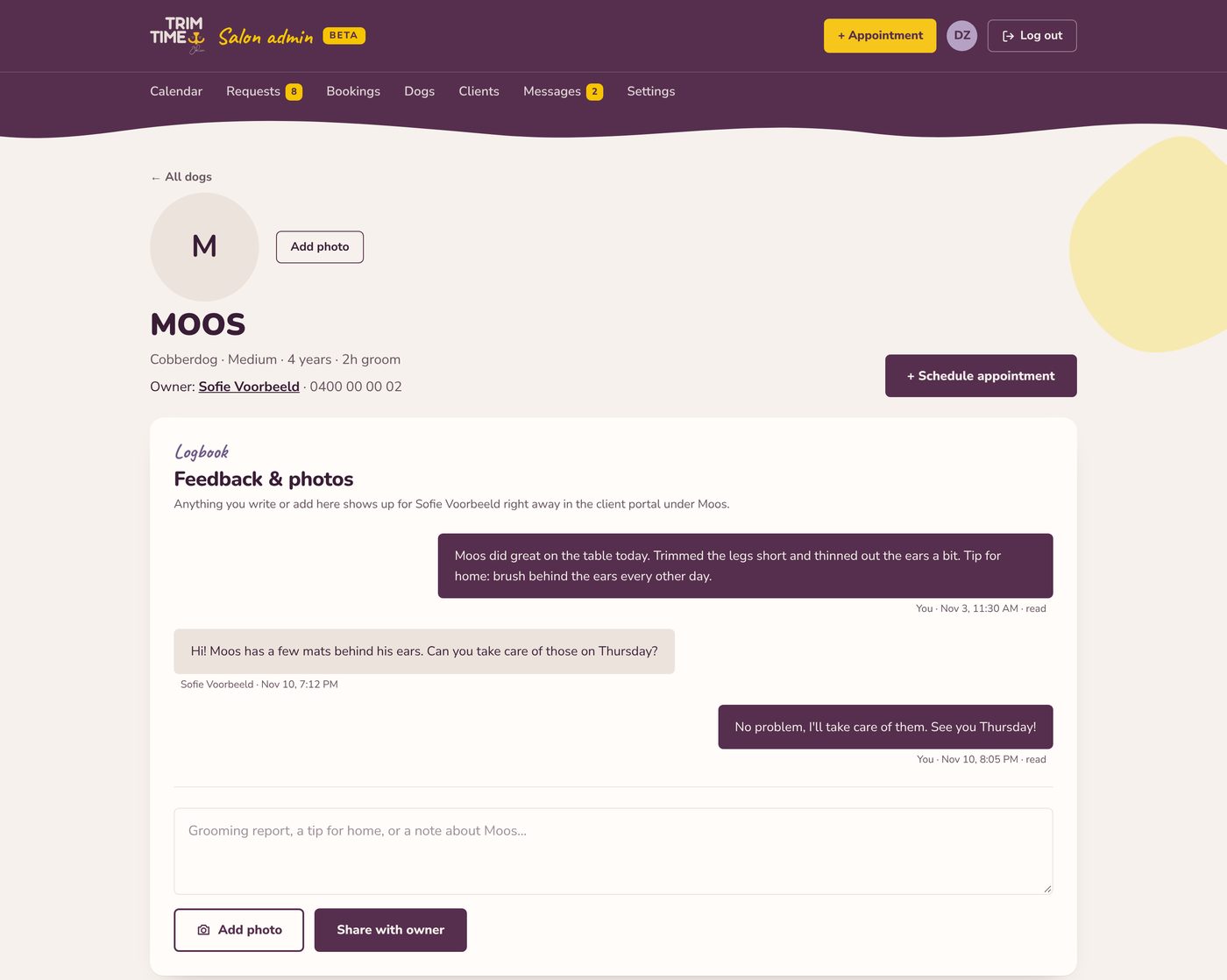
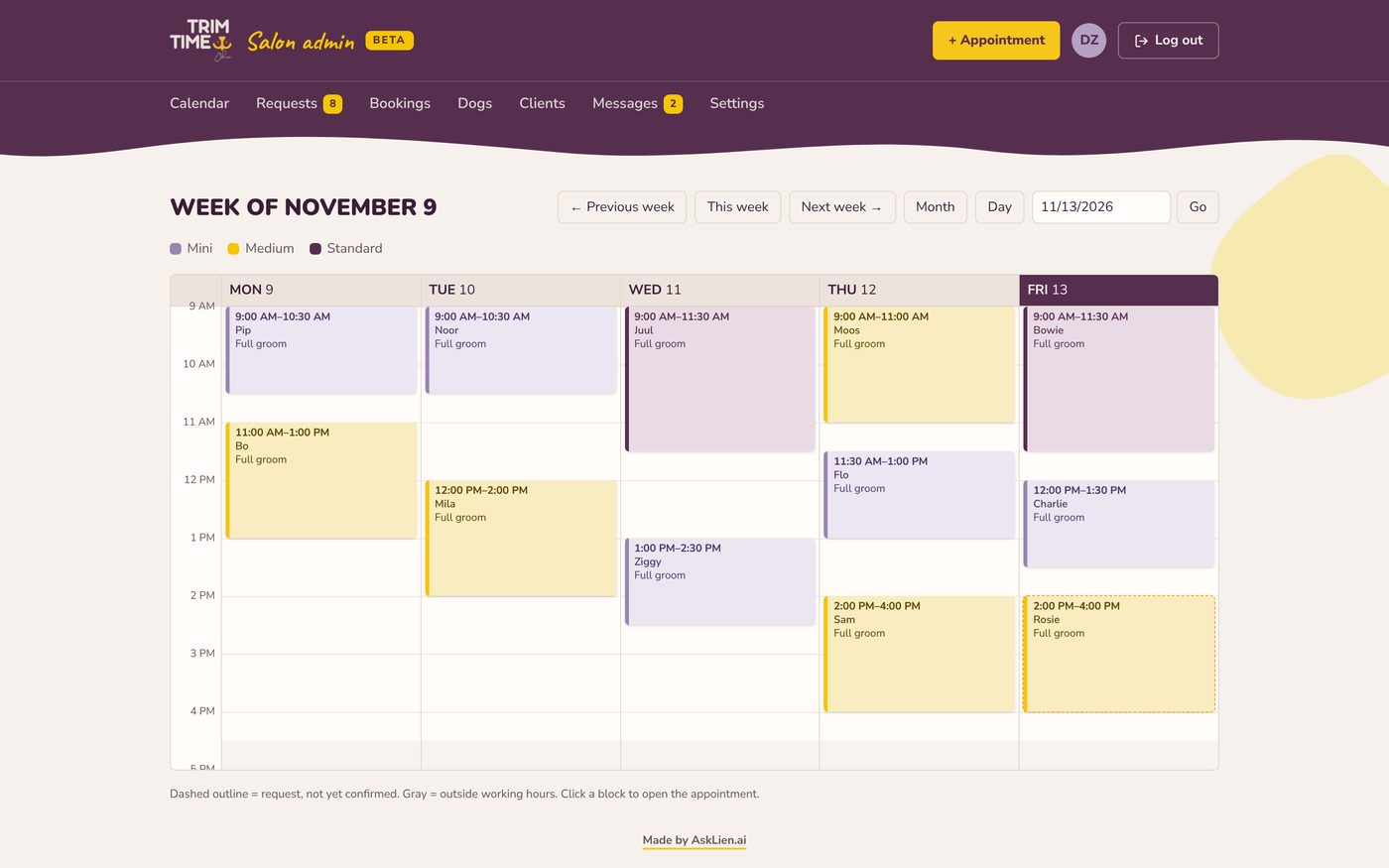
The screens are real, the clients are not This is the app itself, run locally with made-up clients, dogs, appointments and settings. The app is in Dutch, so we switched the labels to English for this page.
Some projects don't start with an audit day. This one started with three things she brought up herself: the schedule, the website and social media.
The schedule was in her head. She knew how often each client needed to come back and which days worked for whom, and every new appointment meant working it all out again. She didn't have a real website. She offered a free video people could sign up for, but after they got it, they never heard from her again. Social media felt like a chore, even though every grooming session produces a before-and-after photo.
Here's what I saw: she already had everything she needed. She had clients, services, followers and a good reputation. The only thing missing was a system around it.
A full audit day would be overkill for a business this size. I put together a custom proposal in three steps: a booking app with a client system, an email sequence behind her free video, and social media that mostly runs on its own.
She picked the first step and made it bigger: one app that brings her website, her bookings and her clients together. The rest can come later, whenever she's ready.
Buying a booking system is easy. The problem is that no off-the-shelf system knows how a grooming salon works. A small dog takes less time than a big one. You can't book five large dogs back to back. And some clients can only come at certain times.
None of those rules were written down. So we wrote them down. I gave her one document full of questions, and she filled it out herself at her own pace. The booking logic is built on her answers.
Then everything waits on you, and you know it. Fixing that doesn't have to be a big project.
It's one app with a public side and a side for her and her clients:
Her services, the workshops, the free video and a waitlist for new clients, in her own style with her own photos. It's live.
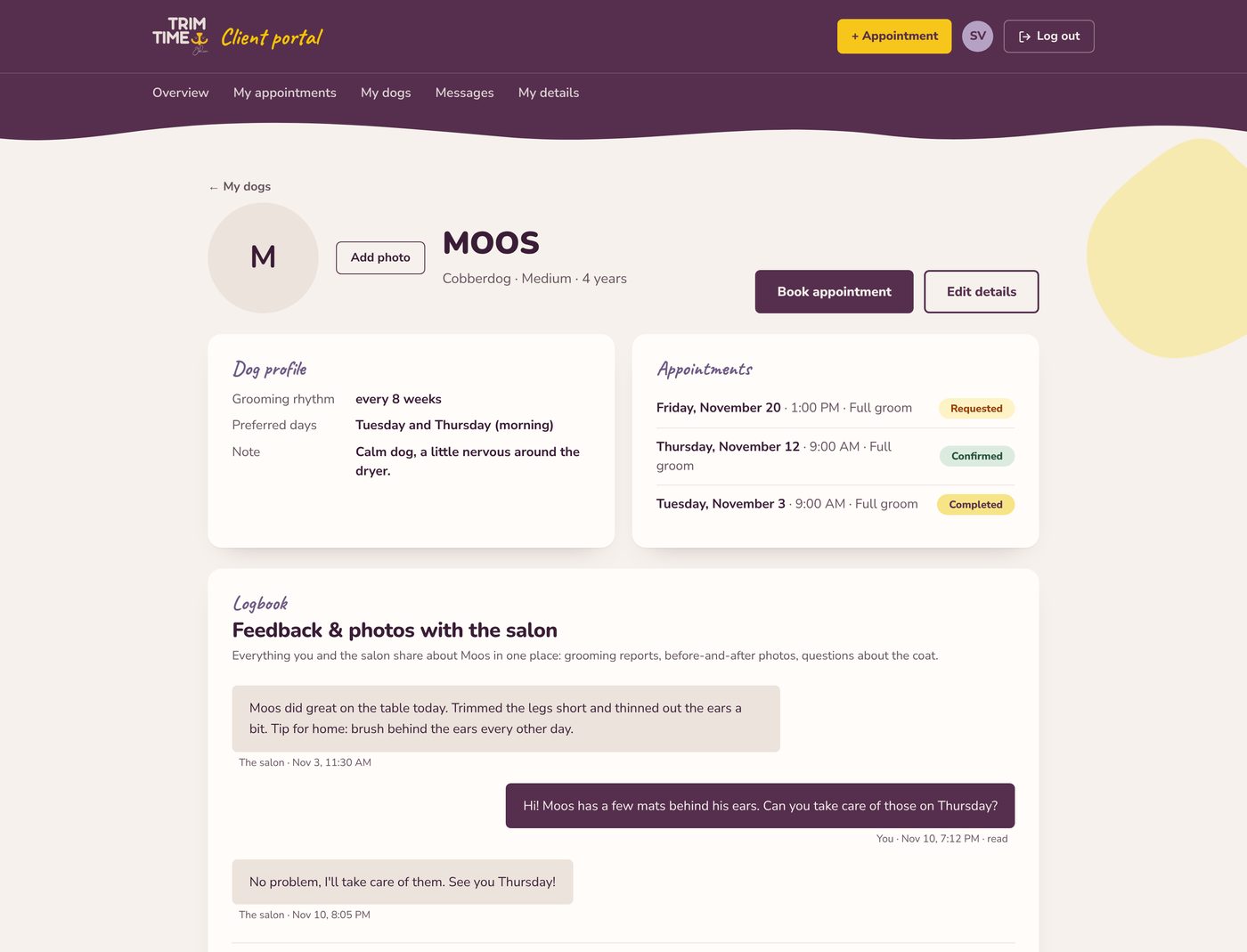
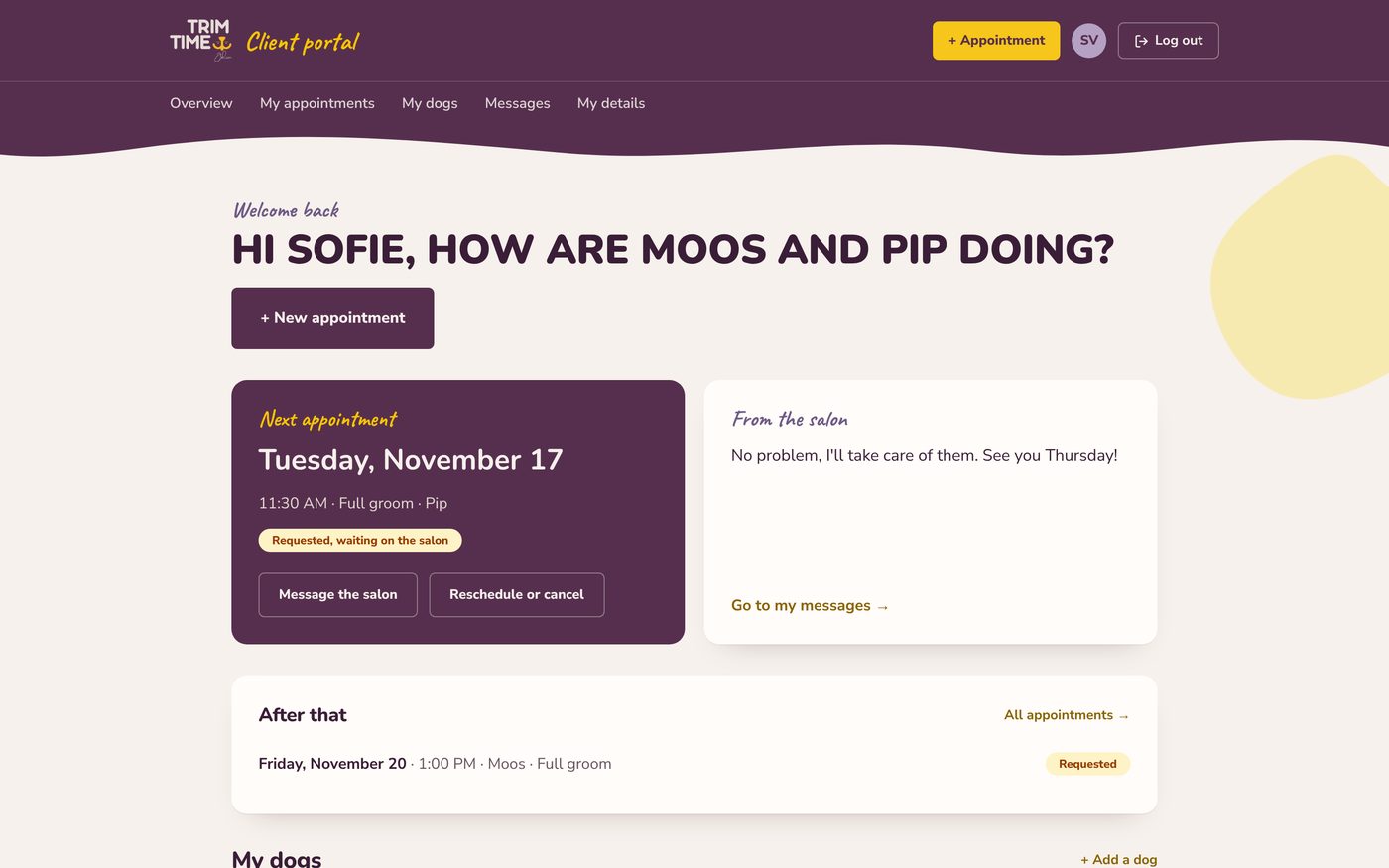
Each client has an account with their dog in it: the grooming schedule, the days that work, and messages with photos.
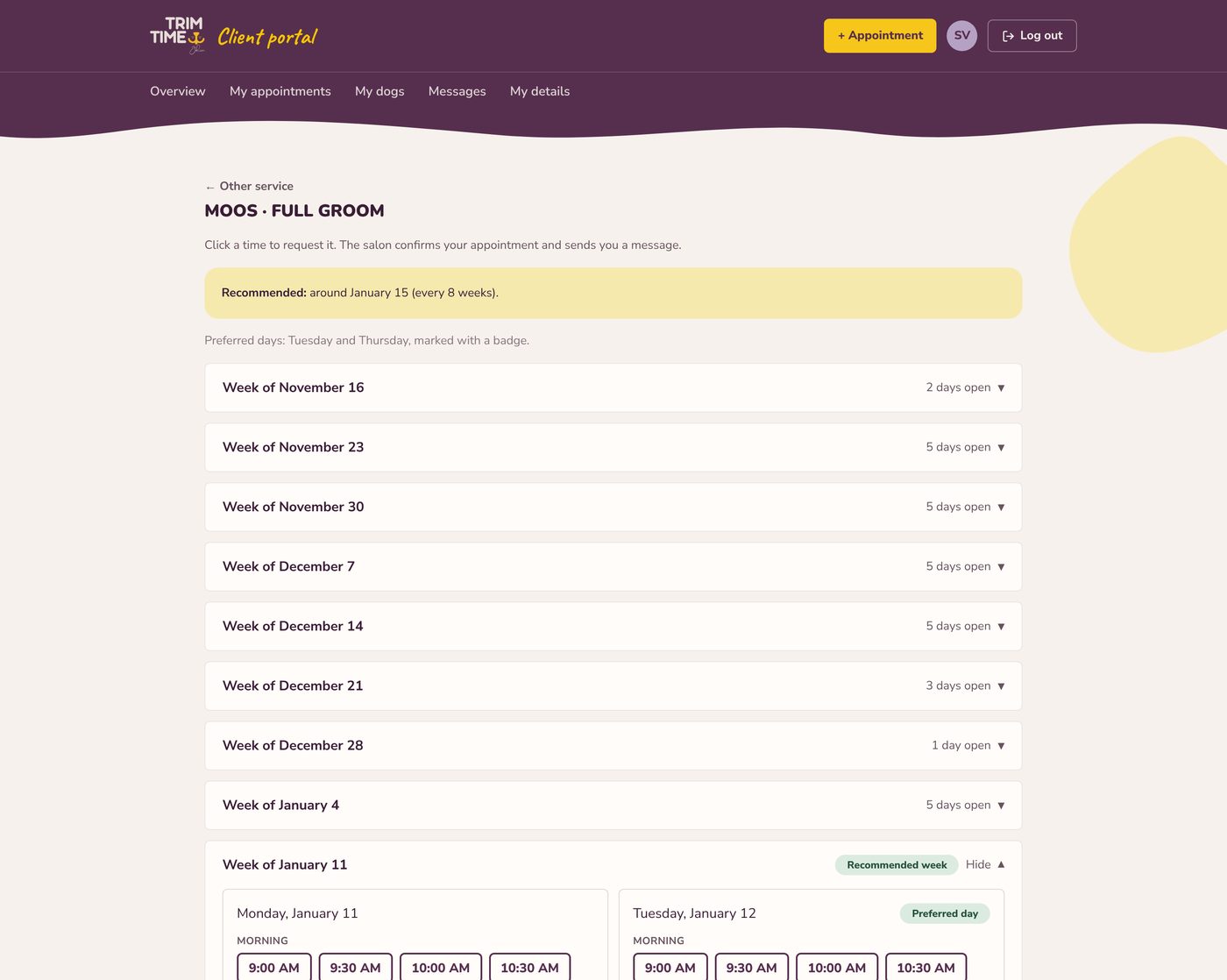
The system knows how long each dog takes and how many fit in a day. Clients only see time slots that will really work.
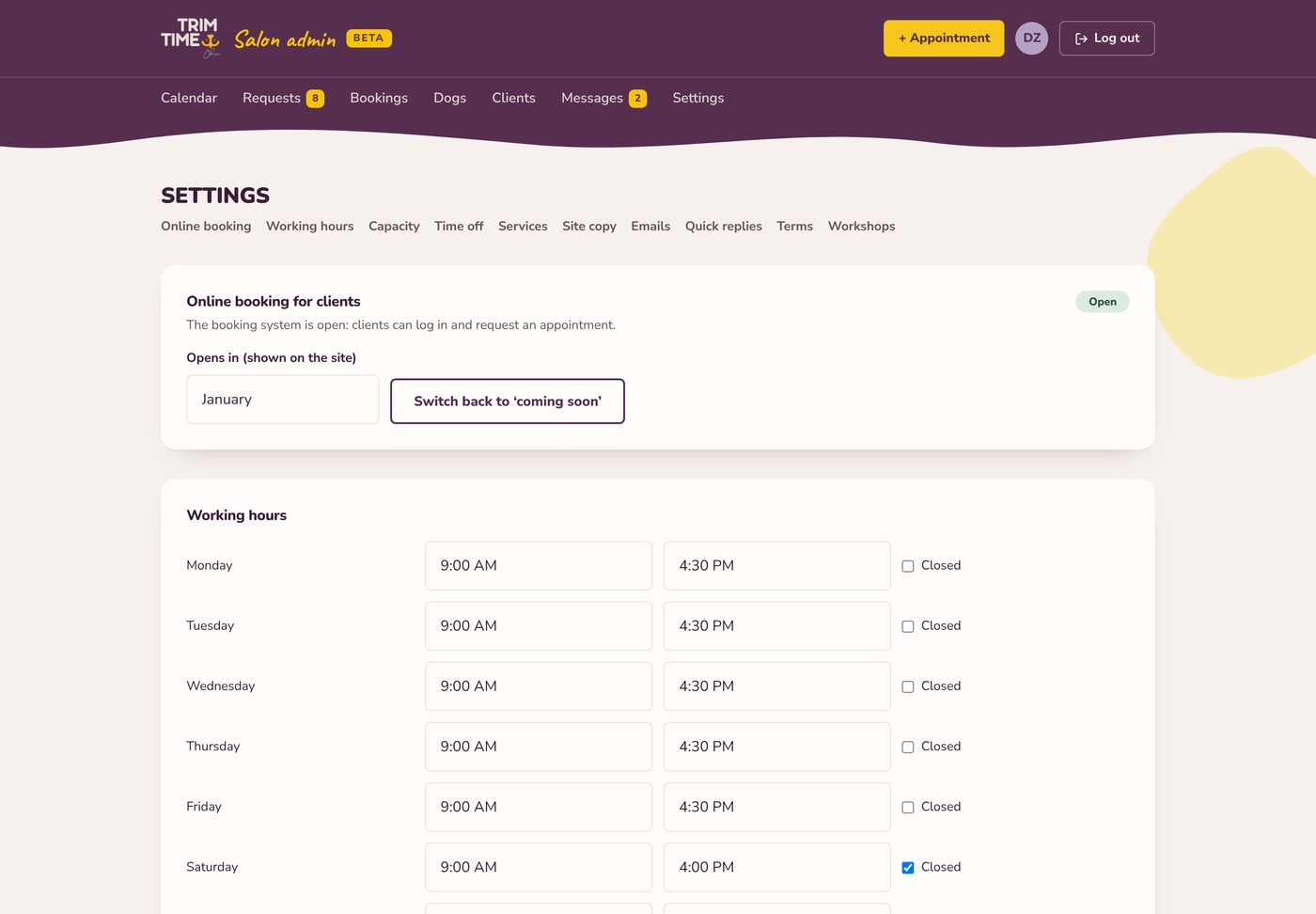
Her schedule, notes on each appointment, a record of no-shows, and all the settings. She changes hours, prices and wording herself.
A confirmation, a reminder and a follow-up go out without her having to think about it.
Online booking is built and turns on with one switch in her settings. Until then, clients see a clean page telling them it's coming soon.
There's no AI agent in this one, on purpose. She needed a system that knows her rules. She didn't need an assistant to think for her.
A confirmation, a reminder and a follow-up for every appointment.
The logic that decides which dog can come when, so she doesn't have to work it out each time.
One app for her and for her clients.
We had a short check-in every week and a WhatsApp group for quick questions. I gave her two style directions to choose from, and her feedback was specific: a softer color, different photos, a less traditional font, and the free video front and center.
It's her business, so it has to feel like hers.
Online booking hasn't opened yet, so I have no results to show for it. Here's where things stand:
In February I'll update this case study with how the first weeks of online booking went.
A website, your clients and your bookings in one app that follows your rules. For small businesses I work from a custom proposal.
We built the app so new modules can be added without tearing anything out: online payments and a small store, a separate calendar for each staff member, phone notifications, and the social media piece she put off at the start.
After launch she'll be on a light retainer that covers hosting, monitoring, updates and small changes.
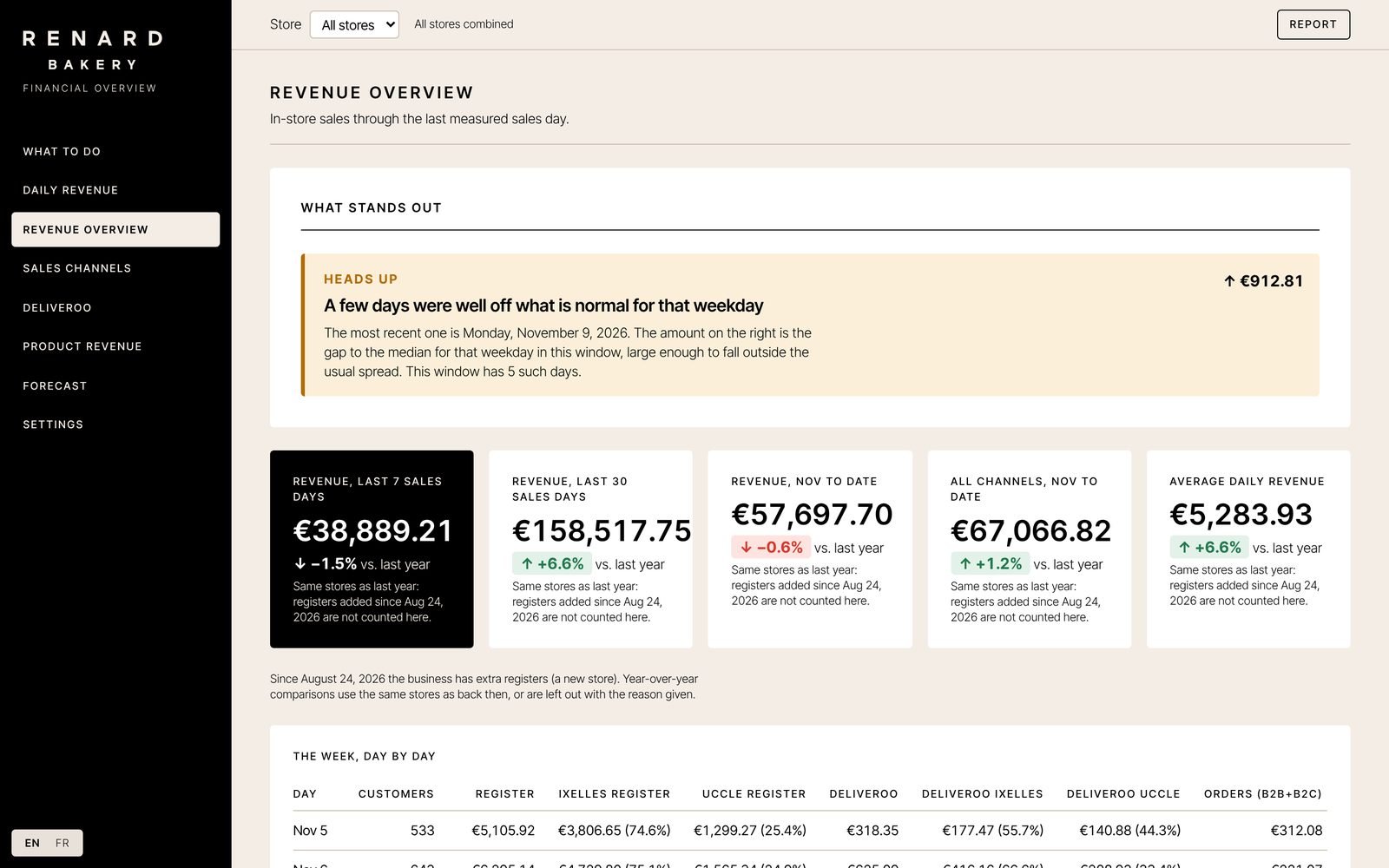
Renard Bakery went from a one-day audit to its own numbers platform, which management opens every day. Includes screenshots of the real platform.
Read the Renard Bakery case study →
Most projects start the same way, and it doesn't take months to get going:
You tell me what you do and where you're stuck. I'll tell you straight whether an audit makes sense or whether something smaller would do the job.
I come to where the work happens and watch. How does work come in? Who decides what? Where does the time go? Which tools are you already paying for?
Within a week you get a report: where time and money are leaking, your priorities in order, a review of your tools, and concrete proposals in more than one size.
Do all of it, part of it, or none of it. If you move ahead with a build, the audit fee is credited in full.
Your team tests as we go. Nothing ships until the people who'll use it have tried it.
If you want it to keep running and keep growing, we look after it on a fixed monthly retainer.
An AI audit costs $2,000, credited in full if you move ahead with a build.
Book your audit day →It starts with a conversation. You tell me where you're stuck, and I'll tell you what I'd do and what it would cost.